.svg)



.jpg)


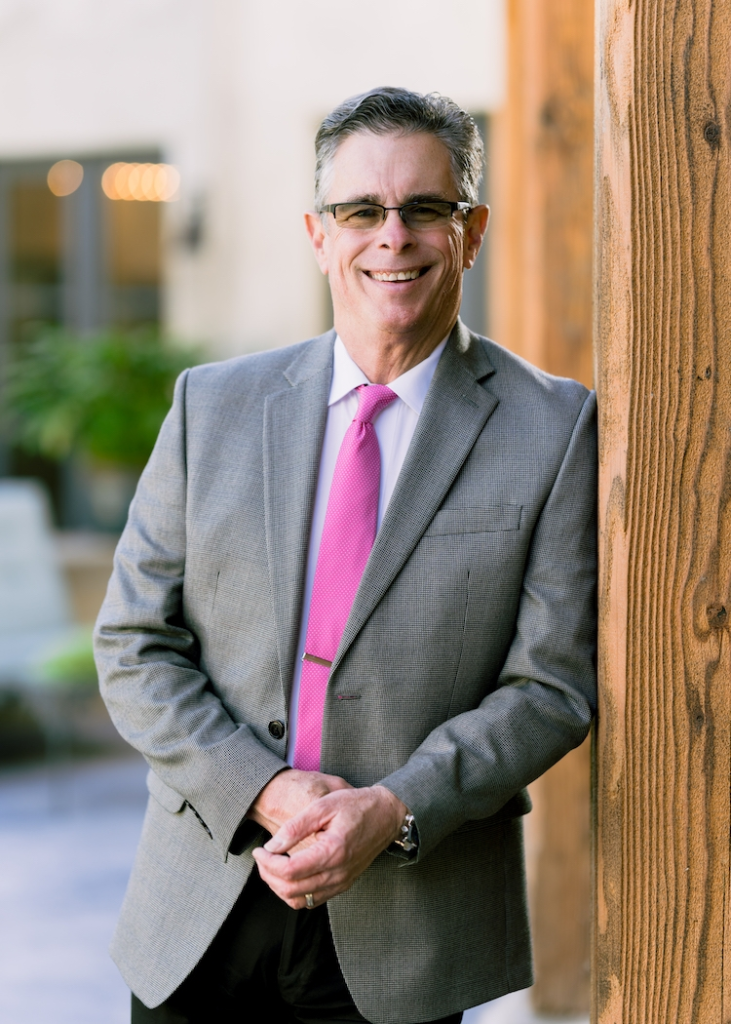
Stop Saying Yes to Everyone: The Luxury Mindset That Changes Everything with Bob Walsmith Jr.
Date published:
April 22, 2026
What does it actually look like to run a real estate business with non-negotiable standards, a CEO mindset, and a life you actually want to come home to? I sat down with Bob Walsmith Jr. to find out.
Bob Walsmith Jr. didn't set out to become a luxury real estate agent. He had an engineering background, a detail-oriented brain, and a girlfriend (who is now his wife) who happened to be in real estate. He watched agents around her with no systems, no professionalism, and no real business acumen making a solid living and he thought: I can do this better.
Thirteen years later, Bob is a top producing real estate agent in Santa Barbara, California, a market where the median sales price sits at $2.4 million. He has closed transactions ranging from $420,000 to $28.2 million. But beyond that, he holds date nights sacred, he travels often, and he tells every new client upfront exactly what his boundaries are when it comes to his work.
This conversation is one of the most practically rich I've had on the podcast. Whether you're brand new or 10 years in, what Bob shares here is a blueprint not just for building a high-producing business, but for building one that actually works for your life.
The Two Prerequisites That Changed Everything
When I asked Bob who his ideal client is, he said he doesn't filter by price point, by neighborhood or by transaction size. He has two prerequisites — and two only.
First, they have to be nice people. Second, they have to be able to afford what they need — not what they want.
If someone satisfies those two requirements, Bob will work with them. It doesn't matter if it's a $400,000 condo or a $30 million estate.
"No commission is worth coming home in a bad mood," he told me and I couldn't agree more.
This is the part that most agents never give themselves permission to do. We're so afraid of turning down business — especially early on — that we say yes to everyone and wonder why we're exhausted. Bob's framework flips that script entirely. He has decided what his business is allowed to cost him, and a bad evening at home isn't on the list.
That is CEO behavior.
You Are Not an Employee, You’re a CEO
One of the things Bob and I connected on immediately was the distinction between agents who operate as CEOs versus agents who operate as employees of their own business.
Bob put it plainly: at their core, most real estate professionals are two things — cheap and lazy. He's not saying that to be harsh. He's saying it because the data backs it up. The last NAR study he read showed the average agent in the United States has $9,800 in their retirement account.
This is what happens when agents treat their license like a job instead of a business — when they skip the systems, avoid the hard work, chase the shiny objects, and never actually build anything that could run without them.
The agents Bob knows who are truly successful? Every single one of them thinks like a CEO. They have spreadsheets for their expenses. They have financial advisors. They have referral networks and SOPs and boundaries, and they protect all of it.
If you've been feeling like you built yourself a job instead of a business, that feeling is data. It's telling you something needs to shift.
The One Question That Separates the Top 1%
Bob learned this from a director at Fannie Mae, and it's the most underrated client relationship strategy I've ever heard.
Most agents know to ask for a client's birthday. Maybe their anniversary. The better ones ask about their kids. But Bob asks one more question that almost no one else in the industry is asking:
"What is the most important day of the year to you?"
The answers will surprise you. Two of Bob's clients — both couples — told him the most important day of the year to them was Halloween. Both had their first date on Halloween. They get a Halloween card from their real estate agent every single year.
This is relationship building at its core and it costs nothing except the willingness to ask.
Bob's father taught him that in any competitive profession, you have to ask yourself: what can I do to stand out from everyone else? Half of agents already send birthday cards. But almost no one has asked what day actually matters most. That one question is the difference between being memorable and being forgettable.
The takeaway: Your clients are already telling you everything you need to know. You just have to ask one more question and actually listen to the answer.
Differentiators That Don't Cost a Fortune
Bob doesn't just ask better questions. He shows up differently at every stage of the client experience and none of it requires a massive budget.
The Listing Presentation Nobody Throws Away
Forget the listing folder. Bob sends a hardcover book embossed with his logo, personalized to each client's criteria, bound by hand in his office. It costs him $13.22 to make and mail.
One woman was so impressed she mailed it back to him with a handwritten thank-you note inside, suggesting he reuse the cover since she figured it must be expensive.
At the time, Bob was working toward a potential $3 million listing from her. The ROI on $13.22 is hard to argue with.
The Closing Gift Nobody Forgets
When a couple flew in from St. Louis to look at property, Bob found out they loved a specific wine. He called the restaurant at their hotel, located their reservation, and had a bottle waiting at the table when they sat down — corkage fee already paid. They didn't see it coming. They didn't forget it either.
The secret? He had gotten to know them over the course of their search. If you've spent that much time with a client and you don't know their likes and dislikes. He's not buying closing gifts that have his name on them, he's buying experiences that have their name all over them.
The Open House Nobody Skips
Bob calls it the Property Premiere Party and the name alone tells you it's not your average Sunday afternoon open house.
He coordinates with a local title company to pull hundreds of homeowners within a half-mile radius. He sends a formal invitation — bring the flyer for entry into a $100 gift card drawing that collects names, addresses, phone numbers, and emails. He hires a taco truck. He has beer and wine for adults, juice for the kids. He sets out branded tote bags, candles, area maps on easels, and a charcuterie board.
Somewhere between 50-80 people show up. Because it's an event, not a transaction.
The cost runs him $1,000-$2,500. The return is a room full of potential sellers, a database of neighbors, and a reputation in the neighborhood that no Zillow ad can buy.
And for his regular open houses? He puts out 15 branded signs. Because if 95% of agents show up with a bottle of water, a flyer, and a sign-in sheet, standing out is not actually that hard.
Boundaries Are a Business Strategy
This might be the most countercultural thing Bob says — and it's the part I want every agent reading this to hear.
Bob tells every client, on day one, that Tuesday and Saturday evenings are off limits. That's date night with his wife and it doesn't move.
Fridays, he wraps up a little after four because he and his wife go wine tasting.
And when he tells couples this upfront, he says the wife almost always looks at her husband and goes: see, honey, you should do that.
Here's what I know from working with agents: the reason most of us don't set these boundaries isn't because we can't. It's because we've convinced ourselves that our availability is our value. That if we're not reachable at 10pm on a Tuesday, someone else will be — and we'll lose the deal.
Bob has been doing this for 13 years. He is top 2% at one of the most respected brokerages in the country and h closes $28 million transactions.
The Referral Network Most Agents Don't Have the Patience to Build
Bob has a list of 265 agents across the country. Every other Friday, he sends them five to ten luxury listings from the Santa Barbara area. If they send him a buyer that closes on a property over $4 million, he pays a 40% referral fee.
Agents are always shocked by the 40%. Bob isn't.
He does the math differently. On a $10 million transaction, keeping 60% is still a significant number. And affluent buyers have affluent friends. The couple from Naples, Florida who buys a mansion in Santa Barbara is going to tell everyone back home — and when those friends want to buy, they're calling Bob.
He finds his referral agents on LinkedIn and Instagram, specifically targeting agents in high price-point markets — Miami, Silicon Valley, upstate New York. He wants to know they'll represent his clients the way he would. He does a Zoom with every single one before adding them to the list.
And then he shows up for them just like he does for his clients. Because the relationship is the business.
The Bottom Line
Bob Walsmith Jr. has built a business that funds exactly the life he wants — date nights, wine tasting Fridays, and Four Seasons Bora Bora with his wife on repea because he made very deliberate decisions about who he works with, how he shows up, what he charges his time for, and what he refuses to negotiate on.
That is the CEO mindset in action.
If you've been feeling like you're working harder than ever and still not building the business (or life) you actually want, this episode is worth your full attention.
Listen to the full conversation with Bob Walsmith Jr. on The Systems-Driven CEO Podcast.
And if you're ready to stop being the employee of your own business and start building something that actually works for your life, I'd love to talk. Book a free strategy call at the link below.
Connect with Bob: BobWalsmithJr.com
Book a Free Strategy Call with Lynea: bit.ly/ConnectWithLynea
.jpg)
.jpg)
.jpg)
%20(1).jpg)