.svg)



.jpg)

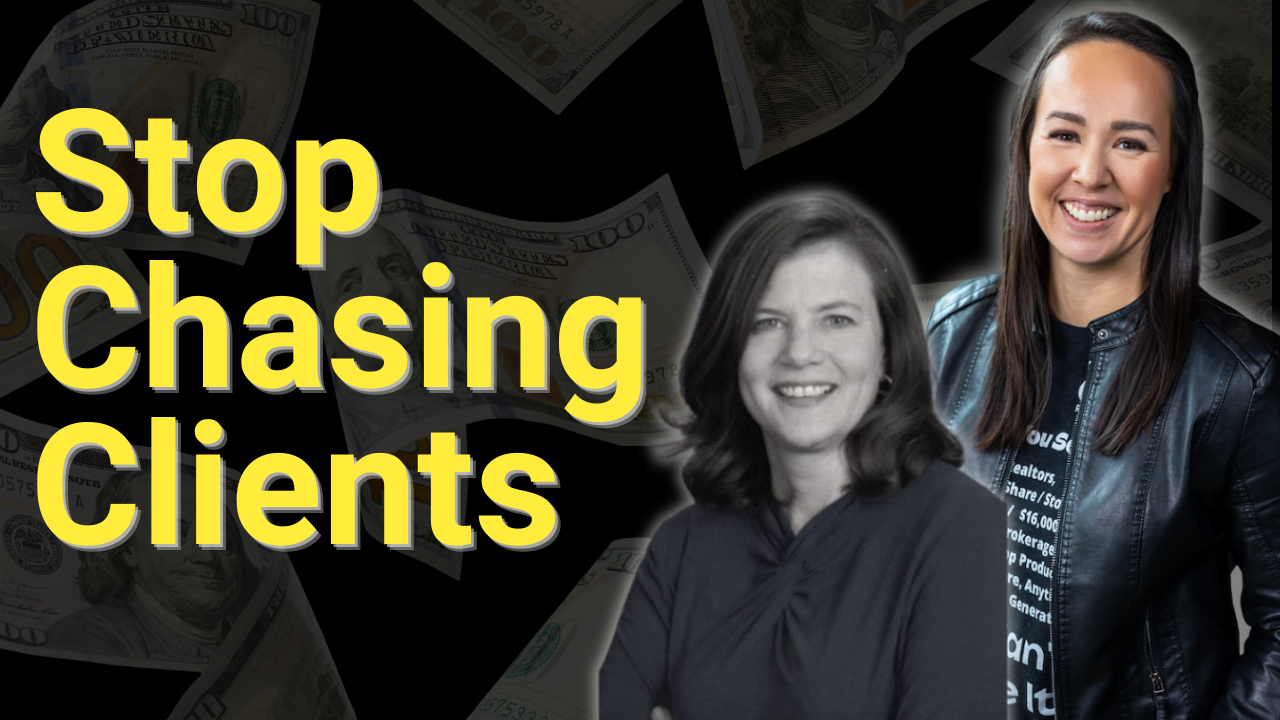

Stop Chasing Clients, Become the One They Come To with Monica Rafferty
Date published:
May 8, 2026
What does it actually look like to build a 20-year career in commercial real estate — from scratch, in a new city, during a market downturn — and come out the other side traveling the world and never wanting to retire? Monica Rafferty has the blueprint.
Monica Rafferty did not plan to be in commercial real estate.
She had a corporate background in the securities industry. She held Series 7, Series 6, and Variable Contract licenses. She and her husband were both working in Denver's dot-com industry when the crash came in 2002, and they found themselves looking for work, in a new state, in a market that didn't have a slot for what she did. So she went to a career counselor. And somewhere in that conversation, commercial real estate came up — and it matched.
More than 20 years later, Monica is Vice President of Commercial Sales and Leasing at Coldwell Banker Commercial. She was voted CCIM of the Year in 2013. She served as President of the Utah CCIM Chapter in 2015. She has carved out a niche in the nonprofit sector that nobody else was serving when she started. She works from anywhere in the world. She sets her own hours. She has no intention of ever retiring.
She also started during one of the worst real estate markets in modern history.
I think about that a lot — because so many of the people I work with are waiting for the right conditions to make a move. Monica didn't have that luxury. She had to figure it out in real time, with no playbook and no guarantees. And what she built because of that is one of the most thoughtful, sustainable business models I've heard described on this show.
"Chasing Other People's Clients Is Not a Business Plan"
Early in Monica's career, a seasoned broker pulled her aside and said something that reframed everything.
"Chasing other people's clients is not a business plan. You have to become the kind of agent that clients want to come to instead of you chasing after them."
She sat with that. And instead of doing what most new agents do — picking up a phone book and dialing for dollars — she took a more strategic approach. She looked at the market and asked: what's underserved? Who isn't being served well? Where is there a real need that nobody's filling?
The answer, for Monica, was nonprofits.
There wasn't a go-to commercial agent known for working with nonprofit organizations in her market. And it aligned with who she was as a person — someone who had always cared about ways to give back. So she went after it. She got credentialed. She interned under senior agents. She joined organizations. She built the expertise that made clients want to seek her out.
I hear agents talk about finding their niche all the time. What Monica actually did is rarer — she found hers by looking at the gap in the market first, and then asking whether it matched who she was. That's not just strategic. That's sustainable.
The Nonprofit Client Who Changed Everything
Monica's very first solo nonprofit client was not a glamorous deal.
She had heard that an old office building was being torn down. She drove over, walked in, and introduced herself to everyone in the building — because they all had to move. In the basement, she found a small nonprofit operating out of one of the cheapest spaces in one of the cheapest buildings in town.
She asked a simple question: Do you have a plan?
They did not.
She represented them. She figured out why they were paying so little — and what that was actually costing them. She helped them negotiate their way into a second-floor space with a mountain view, designed specifically for the clients they served, with better workflow and more dignity. They spent less than before.
When the deal closed, they sent her flowers. The card was signed by everyone in the office.
Monica said that was one of the first commissions she earned entirely on her own — and it made her think, I want to do more of this.
I love this story because it's a masterclass in asking the simplest possible question at the right moment. We're taught to have the pitch. The elevator speech. The unique value proposition. Monica walked into a building being torn down and said: Do you have a plan? That's it. That's the whole thing.
You're Not a Commission. They're Not a Client. They're a Person with a Need.
One of the most important moments in this conversation came when Monica said something almost offhand — and I had to stop her.
"People are real people. They're not a commission. And I think the minute you start feeling like they're a commission and not a person with a need, you're in trouble."
She went on to talk about working with nonprofits who sometimes ask her to waive her commission. And her response is one I think every agent should have memorized.
She doesn't apologize. She doesn't discount. She says: I can't do that — but what I can do is help you get the very most out of your budget and the very most from your wish list, for the same price as you'd pay anyone else.
There's no begging in that. No shrinking. Just a clear statement of value and a redirect toward what she can actually do.
The commission conversation is one that paralyzes so many people in this industry. What Monica models is that you can hold your value with complete confidence — not by being defensive, but by being so clear on what you bring to the table that there's nothing to defend.
Money as a Tool, Not a Goal
Monica shared a story about an economics professor she had in college who told his students something she's never forgotten.
He had the same earning potential as a Wall Street trader. He chose to take his income in family time and surfing.
"When you realize that money doesn't equal success," Monica said, "you can start to see it as a tool to make your life the way you want your life to be — instead of as the goal."
This is exactly what a CEO mindset looks like in practice. Monica built a business that let her turn the tap up when she needed more revenue, and turn it down when her kids needed more of her. She did conference calls at 1am from hotel hallways so she could travel internationally without fully disconnecting. She never stopped working — she just stopped letting work decide the terms.
The agents I work with who are stuck in burnout almost always have this relationship with money backwards. They're chasing the number without any picture of what the number is actually for. Monica's framework flips it: start with the life you want, and build the business that funds it.
The Financial Discipline Nobody Talks About
Monica also said something that I don't hear enough in real estate spaces.
Don't spend money you don't have.
She's watched agents get their first commission — and buy a new car. Miss their taxes. Start delivering pizzas on the side. All because the culture of this industry tells them their possessions signal their success.
I audit expenses with every client I work with. I look at their P&L from the last year and I ask about every single line item. And I will tell you — the number of agents I've seen pouring money into software they're not using, marketing they're not ready for, and branding they haven't earned yet is staggering. The discipline to take care of yourself financially first, before spending to look successful, is one of the most underrated CEO skills in this business.
Monica has it. It shows in how she built — and in how she's still standing 20 years later.
What Advice Would You Give the 20-Year Veteran?
Near the end of our conversation, I asked Monica what she'd say to someone who's been in the business for two decades and is wondering what's next.
Her answer was beautifully simple.
"Very small changes can make a very big difference. You don't need to turn your life upside down."
She talked about looking back through your career — not at the highlights, but at the moments when you smiled without thinking about it. The client who made you feel like you were doing exactly the right thing. The neighborhood you always loved showing. The type of deal that energized you instead of draining you.
Find the patterns. Do more of that. Do less of the rest.
I call it the Marie Kondo method — and I use it with my clients constantly. Go through your business, your client list, your day-to-day. If it doesn't spark something — cross it off. Build toward the version of your work that actually lights you up.
It's not a dramatic reinvention. It's a recalibration. And sometimes that small shift is the thing that changes everything.
Monica Rafferty is proof that you don't have to have the perfect entry point, the perfect market, or the perfect plan to build something that lasts. You have to be willing to get strategic, go deep, and keep showing up as the most credible, most capable version of yourself — until the clients who need you most find their way to you.
That's the whole thing.
Listen to the full episode wherever you get your podcasts — and if this resonated with you, I'd love to connect.
📲 Ready to build a business that works for your life? Book a strategy call with me here.
.jpg)
.jpg)
.jpg)
%20(1).jpg)