.svg)



.jpg)

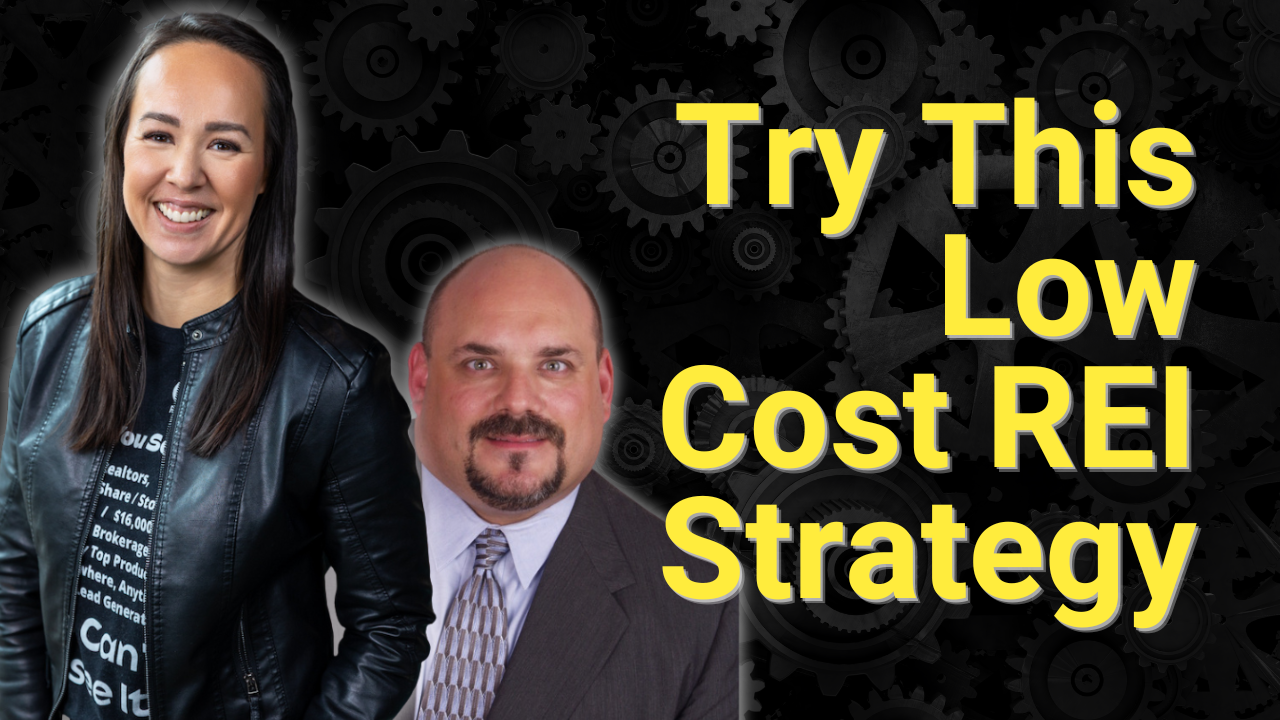
Real Estate vs. Commercial, Can You Do Both? He Says NO!
Date published:
May 27, 2026
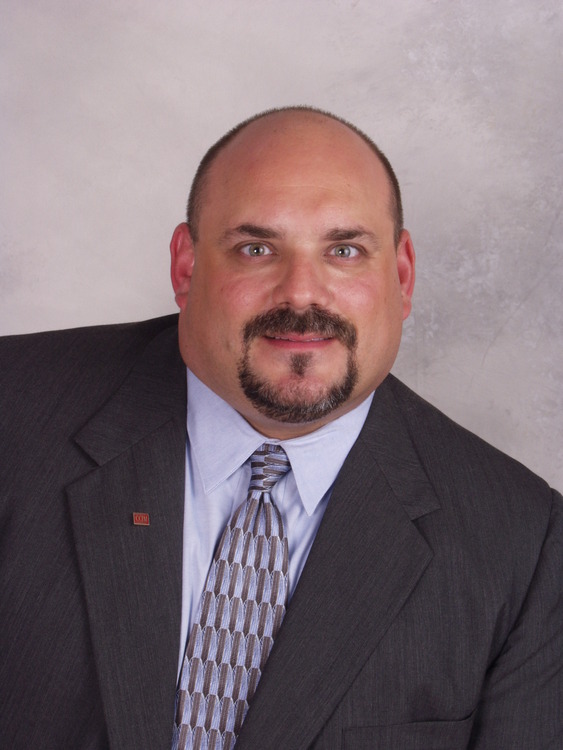
There's a version of success that looks like an overnight breakthrough. And then there's the version Adam Von Romer, CCIM is living — 42 years in commercial real estate, nine books, $3.5 billion in transactions closed, and a 2025 Industrial Deal of the Year award sitting on his desk.
"I'm an overnight success," he joked when Lynea brought it up on the podcast. "I finally got my plaque."
His humor lands, but the point behind it is one every CEO and founder needs to hear: the things that actually compound — expertise, reputation, the ability to see what others can't — don't happen overnight. They happen over decades of deliberate, focused work.
Adam's episode of The Systems-Driven CEO is one of the most education-dense conversations in the show's history. He broke down commercial investing in a way that made concepts like triple net leases, ground leases, and internal rate of return finally make sense — and he did it without ever losing sight of the bigger question every high-achieving leader eventually asks: how do I build a business that generates real wealth without consuming my entire life?
The Case for Ruthless Specialization
Adam's first and most emphatic point: you cannot be all things to all people in real estate. Not in residential. Not in commercial. And definitely not in both at the same time.
"It's absolutely impossible for you or anybody on this planet to have the bandwidth to sell an apartment building on Monday, a house on Wednesday, a retail center on Thursday, and follow up the next week with an industrial lease," he told Lynea. "You just don't know enough to know the nuances of each of those transactions."
To prove it, he told the story of the one time he accidentally sold a residential house — for a family friend, as a favor. It was a disaster from the title company on down. He's never sold another one since. He doesn't even buy and sell his own home.
This isn't about being precious. It's about being precise. When you're working on a $17 million lease with a 20-year liability tail, a mistake isn't just embarrassing — it's the kind of thing that ends careers and bankrupts clients. Adam once watched a property sell for $19 million when three separate offers confirmed that price. It later closed with a different broker at $27 million. The difference was a broker who actually understood how to calculate the net present value of the income stream.
The high-achieving leaders I work with often struggle with this exact thing — the belief that doing more means earning more. But the most elite operators know that the opposite is true. Specialization is leverage. Depth is the differentiator.
The Referral Economy That Pays Both Ways
Once you've committed to your lane, something interesting happens: the deals you don't do start making you money.
Adam described a top residential producer who calls him for every commercial referral. He doesn't try to handle it himself — he just dials Adam and moves on. The most recent check Adam sent him? $21,750.
"He recognized that if it's commercial, he calls Adam. Done," Adam said. "And it goes the other way too."
This is systems thinking applied to your professional network. You're not the expert in everything — but you know the experts who are. That network becomes infrastructure. It generates income without generating work.
Ground Leases, Triple Nets, and the Walgreens Deal
One of the most illuminating segments of the conversation was Adam's breakdown of how triple net lease deals work — and why so many real estate professionals fundamentally misunderstand the structures they're dealing with.
He started with a story. He found a listing marketed as a ground lease with an 8% return — genuinely exciting in any market. When he called the listing agent to discuss the deal, it became clear immediately that the agent was not actually selling a ground lease. She was selling the building that sat on top of a ground lease. The difference is not trivial.
"At the end of that lease, the building goes back to the ground lessor," Adam explained. "So you've got a 10,000 square foot retail center sitting on 30,000 square feet of space with a lease running for the next 30 years. Whoever owns that building at the end of those 30 years is giving it back to the landlord."
The agent didn't know this. Her broker didn't catch it either. It's the kind of mistake that costs clients millions.
The Walgreens structure, on the other hand, is a masterclass in how commercial deals can work when everyone understands the mechanics. Here's how Adam explained it:
A developer contracts for a lot, builds a Walgreens store, and leases it back to Walgreens for 25 years with five-year renewal options. The developer is into the deal for $5 million. They put it on the market for $7 million. A well-capitalized investor buys it and receives $450,000 per year in guaranteed income from a $187 billion company — one that is self-insured, pays its own property taxes, and maintains the building itself.
"What do you have to do as far as management goes?" Adam asked Lynea. "You have to manage your bank account being open. That's it."
Developer wins. Walgreens wins (zero capital outlay for a location they wanted). Investor wins (a passive annuity backed by a Fortune 500 tenant). This is what commercial real estate looks like when it's working.
The Metric That Actually Matters
Ask most real estate investors how they evaluate a deal and they'll say cap rate. Adam will tell you that's the wrong answer.
"Cap rate is only valid for the last day of the first year," he said flatly. "That's all it measures. It measures the relationship between the price paid and the net operating income — and it makes no provisions for what happens next."
He posed a scenario: imagine someone offers you a building at a 12-cap. Sounds extraordinary. Then they mention the tenant is leaving February 28th. Your 12-cap is suddenly a zero-cap. Do you still want it?
Flip it: same building, zero-cap right now. Terrible, right? Unless the ground just signed a 50-year lease with AT&T that starts in 30 days. Now the cap rate is 10%.
"If you don't understand the metrics, you can really get yourself in a jam," Adam said.
The metric he actually uses is internal rate of return — because IRR measures what your money is doing the entire time it's invested in the deal, accounting for the timing and magnitude of every cash flow, not just the income on day one.
This is the kind of distinction that separates a seasoned operator from someone who just passed their license exam. And it's the reason Adam spent an hour in a CCIM workshop on lease buyouts the morning of this recording — even after 42 years.
The Investment Ladder (And Where to Start)
If you're a high-achieving founder thinking about commercial investing but convinced you need millions to start, Adam's advice is to slow down and start smaller than you think.
"For a newer or neophyte investor, the place to be is small multifamily — five units, eight units, ten units. For somebody who wants to get started, buy a four-unit."
Four-unit properties are still financeable by traditional lenders and still classified as residential — which means lower barriers to entry. From there, Adam's path was systematic: buy small apartment complexes, stabilize them, 1031 exchange them into larger apartment complexes, and eventually 1031 into commercial warehouses.
"Today, I would only own a multifamily building long enough to clean it up, sex it up, and sell it to buy another warehouse," he said. "That's just my preference."
The 1031 exchange is the engine of that ladder. Each transaction defers the capital gains tax and allows the full proceeds to be reinvested. Over time, a $300,000 four-unit can become a $2 million industrial asset — without ever paying capital gains along the way.
36 Airbnbs, $250 Crowdfunding, and Making the Entry Point Accessible
Commercial real estate's reputation as a closed door for anyone without serious capital is something Adam has spent years working to change.
He owns 36 Airbnbs — all in income tax-free states — underwritten exactly like hotel properties, with third-party management handling all operations through platforms like Airbnb and Vrbo. His yield on each property shows up as a wire. He doesn't manage a single one himself.
More accessible still is the crowdfunding vehicle he's developed under Regulation D, structured as a micro-cap offering through a platform called Mogul. The minimum investment is $250.
"How badly can you get hurt putting $250 into something?" he asked. "How many people do you know who want to invest in real estate but don't know how to start?"
Investors get a claim on income and appreciation without deeded interest. They can reinvest their returns or take a wire. There's even a referral incentive — $50 in cash or $50 of additional ownership for bringing in a new investor.
This is the kind of entry point that democratizes commercial investing — and it's the kind of creative structuring that only becomes visible after 42 years of working through every variation of a deal.
The Rule That Has Never Failed Him
Near the end of the conversation, Lynea asked Adam for one piece of advice he'd leave with the audience.
He quoted the REALTOR Code of Ethics, Paragraph 11: "If you don't know it, don't do it."
"If you're not growing, you're ripe and rotten," he added. "Sharpen the saw. Become a student of your product type. I was sitting through an hour-long CCIM class on lease buyouts right before I came on this show."
That discipline — the willingness to stay a student even after 42 years and $3.5 billion — is the reason Adam's career has compounded the way it has. He doesn't just know commercial real estate. He keeps actively choosing to know it better.
It's the same principle I work with in my own coaching: the leaders who build the most durable businesses aren't the ones who know the most right now. They're the ones who stay committed to learning long after they have every reason to coast.
Bottom Line
Adam Von Romer's career is proof that the way you build lasting wealth and a business that actually works for you isn't through complexity — it's through radical clarity. Know your product. Build your network. Understand your metrics. Stay a student. And don't do what you don't know.
Whether you're scaling a residential business, exploring your first commercial investment, or trying to build the kind of portfolio that generates income without requiring your constant attention, this episode is required listening.
Connect with Adam Von Romer, CCIM at axisrealtyadvisor.com or reach out directly at (954) 493-1287. Interested in his crowdfunding investment vehicle? You can find available properties at Mogul with a minimum investment of $250.
Ready to build a business that generates real wealth without consuming your life? Book a strategy call with Lynea Carver here and let's talk about what it actually takes to scale from operator to CEO.
.jpg)
.jpg)

.jpg)
%20(1).jpg)