.svg)



.jpg)

.png)
Most Agents Are Reactive, Here's What the Proactive Ones Do Differently
Date published:
April 17, 2026
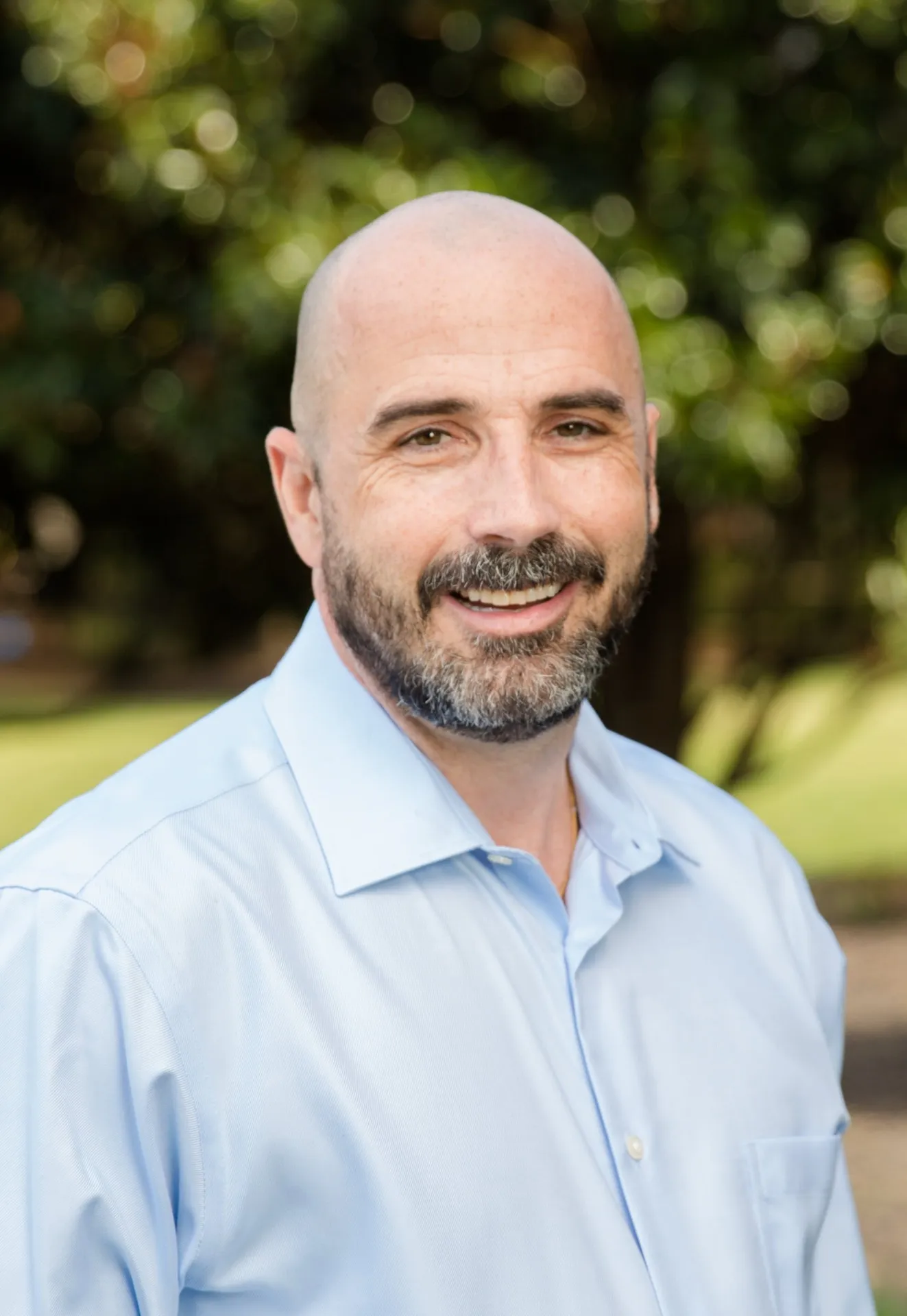
Stop Trying to Sell. Start Learning to Guide. — with Dan Rochon
What if the reason you're struggling in sales has nothing to do with your scripts, your leads, or your market — and everything to do with the way you think about selling in the first place?
Dan Rochon spent years figuring that out the hard way. He was a waiter at the Capitol Grille in Washington, D.C., a functioning alcoholic drinking a dozen beers and two bottles of wine a day, and a man who knew he was meant to be an entrepreneur but had no idea how to get there. He got sober — 20 years ago now — got his real estate license, and spent the first six months with zero closings. Then something clicked. By month 18, he had bought the brokerage he worked for and had roughly 150 agents working with him. He ran it for the next ten years, sold it, wrote his first book, and spent the better part of the last six years building his second: Teach to Sell, a methodology that took 25 years to live and six years to write.
This conversation is one of those episodes that reframes something you thought you already understood. Dan doesn't just coach agents on how to sell more — he challenges the entire premise of what selling is.
Teach to Sell Has Nothing to Do with Selling
Despite its name, Teach to Sell is not a sales system. It's a philosophy of guidance.
Dan's core premise: every human being processes the world the same way. We take in a circumstance through our senses, assign it a meaning, have a thought about it, feel something about that thought, take an action, and produce a result. That loop runs on repeat — mostly on autopilot — which is exactly why most people keep getting the same results no matter how hard they try to change.
When you understand that framework, Dan says, you can step into another person's world. You can guide how they think. And when someone feels genuinely understood and led — not pushed, not convinced — they follow naturally.
"Teach to Sell is about what happens between two individuals intending to guide another person so they can get what they want," he told me. "When you do that, they naturally follow you."
That's not sales. That's leadership.
What Most Agents Skip Entirely
One of the most practical things Dan shared in this conversation is the idea of consulting clients upfront on the predictable emotions they're going to feel — not just the logistics of a transaction, but the actual feelings.
Most agents wait for the blowup. A seller gets upset during the home inspection because the buyer's agent is asking for repairs and suddenly the whole deal feels adversarial. The agent scrambles to put out the fire. Dan's approach is different: have that conversation before the fire starts.
If you tell a seller at the very beginning, "When we go under contract, there will be a home inspection. A lot of times my clients feel like the buyer is trying to take advantage of them — and that's a perfectly natural experience," something shifts. They're less likely to spiral when it happens. And if they do, they're looking at you as the resource — the professional who saw it coming — and that trust deepens.
"I've noticed that most agents are reactive rather than proactive," Dan said. "They wait for the blow up. I say, let's consult them before it occurs."
Your clients sell a home once every seven to ten years. You do it every month. That experience gap is your expertise. Lead with it.
From Rock Bottom to Brokerage Owner in 18 Months
Dan's origin story isn't a rags-to-riches narrative. It's more complicated than that — and more honest.
He spent years drinking heavily, masking the discomfort of a life that didn't match the one he could see for himself. A friend named Dave helped him get sober. A few years later, Dave passed away. Dan carried that loss alongside his sobriety and his ambition — a combination that shaped everything that came after.
When his friend Billy suggested real estate, Dan saw it as a clean slate: a few thousand dollars, 60 hours of coursework, and unlimited earning potential. He jumped in with blind optimism and came out of the first six months with zero closings.
"I was drowning," he said simply.
What changed wasn't a script or a tactic. He started talking to every top salesperson he could find. He stopped begging for business and started showing up as an educator — someone who could explain what the experience would be, what the client would feel, what to expect. The philosophy that would eventually become Teach to Sell started forming in those conversations.
He had his first sale at month six. From month six to month eighteen, the business exploded. By month eighteen, he owned the brokerage.
The 3-Story Building Framework
When Dan started training agents, he needed a way to explain the difference between salespeople and business owners — and why so many talented agents never make the leap.
He landed on a building analogy that I think is one of the clearest frameworks I've heard for understanding why some agents plateau and others scale.
The foundation is belief. Not just belief in your product or your market — belief in yourself. Without it, nothing above it holds.
The first floor is lead generation, broken into three categories: prospecting (costs time), marketing (costs money), and networking (costs both). For a new agent with no budget, that means starting with prospecting. As your business grows, you layer in the others in that order.
The second floor is organization building — using systems, leverage, and people to do what you're not good at, so your ceiling stops being your own hours.
The third floor is leadership: teaching others how to think so they can get what they want. That, Dan notes, is also the foundation of Teach to Sell. It all connects.
"If you want to take a vacation with your wife, it's hard when it all relies on you," he said. "Build the business so that it doesn't."
The One Belief You Need When You Have Zero Belief
One of my favorite exchanges in this conversation happened when I asked Dan where someone starts when they have absolutely no belief — in themselves, in their abilities, in whether any of this is possible.
He said you only need to believe one thing:
I have the ability to figure it out.
That's it. You don't need to know the how. You don't need to have done it before. You just need to trust that if someone else has done what you're trying to do — and somewhere on this planet, someone has — you can find out what they did and do that.
We also talked about ditching the word "how" entirely when goal-setting. Most people get so stuck trying to figure out the path that they never commit to the destination. Dan's reframe: decide on the goal, look in the mirror, ask yourself if there's someone on the planet who looks like that person staring back at you who has already achieved it, and find out what they did. That's your how.
I've been saying for years that the worst word in business is "try." Dan made a compelling case that "how" runs a close second.
The CPI Communication Model
For anyone who wants a concrete framework to take into their next client conversation, Dan also walked through what he calls the CPI Communication Model — originally standing for "consistent particular income" and now reframed as "consistent particular impact."
It has three parts. First, connect energetically. We are, as Dan puts it, spiritual beings in a human condition — and when you're genuinely present with another person, they feel it. Rapport isn't a technique, it's an energy. Second, ask adept questions. Not surface-level questions — deep, skillful questions that uncover what someone actually wants, why it matters to them, and what achieving it would mean for their life. Third, actively listen. Not just to their words, but to the energy in the room. The moment that connection breaks, influence goes with it.
"You have to start by entering the other person's world," Dan said, "and then guiding them."
That's the whole model. It sounds simple because it is. But simple and easy are not the same thing.
The Bottom Line
Dan Rochon built his life and his business the hard way — through sobriety, through failure, through 25 years of learning and documenting and refining a system that he genuinely believes can help anyone get to no broke months. His book Teach to Sell is the culmination of all of it: the belief work, the lead generation, the systems, the leadership, and the communication model that ties it all together.
If you've ever felt like you're pushing too hard, chasing too much, or burning out trying to close — this episode will change the way you see the entire game.
Listen to the full conversation with Dan Rochon on The Systems-Driven Agent Podcast.
And if you're ready to stop operating like a salesperson and start building a business that works for your life, I'd love to connect. Book a free strategy call at the link below.
📖 Pre-order Teach to Sell + free bonus chapter: teachtosellbook.com/preorder
🌐 Dan's website: nobrokemonths.com
Book a Free Strategy Call with Lynea: bit.ly/ConnectWithLynea
.jpg)
.jpg)
.jpg)
%20(1).jpg)