.svg)



.jpg)

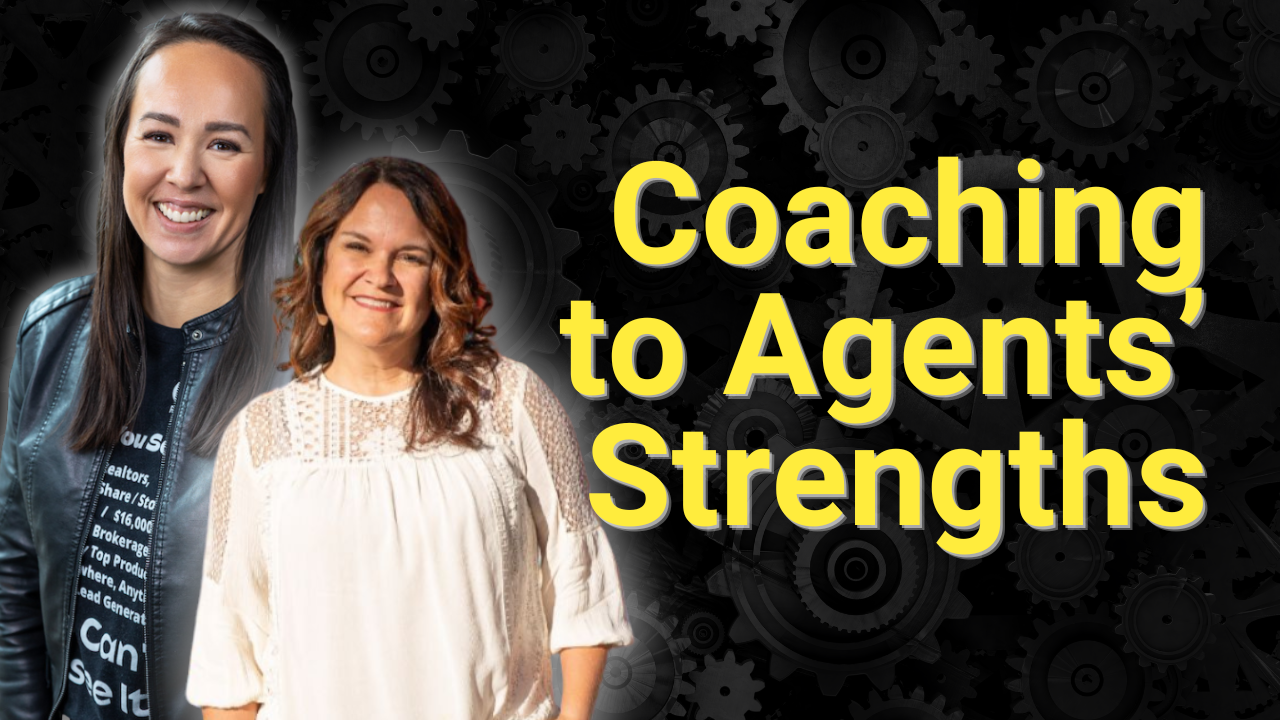

How to Build a Real Estate Team That Coaches to Individual Strengths (and Actually Retains Agents)
Date published:
June 3, 2026
I've had a lot of guests on this show who've hit that wall. The one that shows up somewhere around year eight or ten when you've built real success — you're closing deals, your name is out there, your clients love you — and you find yourself wondering if there's more. Not more volume, necessarily. More leverage. A business that doesn't just depend on you being the one who shows up every single day.
Theresa Zech is one of those people. Phoenix-based, 11 years in real estate, top 2% in her market, and now co-leading a team of 20+ agents spread across the entire Phoenix Metro alongside two co-leads who bring nearly 30 and 20 years of experience, respectively. And beyond her own team, she's co-created something I genuinely wish had existed when I was building: the Atlas Real Estate Platform — a broker-agnostic community for agents who want to grow a business that's actually built around them.
Our conversation went a lot of places. We talked about the Phoenix market. We went deep on AI — which was not planned, but those tangents are usually the best part. And we landed somewhere I always hope we land: on the fundamentals that hold everything together no matter what the market is doing.
The Phase Everyone's Chasing and Almost Nobody Talks About
I talk a lot about leverage. It's one of my favorite topics because most agents are so focused on doing the work that they never step back and ask how to build a business where the work keeps happening even when they're not the ones doing it.
The way I see it, leverage has phases. Tools and systems come first. Then processes. Then people — and that's where things get interesting. People leverage is the hardest to build and the most powerful when you get it right.
Theresa arrived at team leadership the way a lot of great operators do: she got busy enough that she had to. But what she did after that is what makes her worth listening to.
Coaching to the Person, Not the Playbook
Here's what I love about how Theresa builds her team: she doesn't teach her agents to do what she does. She figures out who each agent actually is and builds their growth plan around that.
This might sound obvious. It isn't.
Most teams hand new agents a lead gen script and a CRM and tell them to go. Theresa sits down with them, uses DISC profiling, talks through what actually motivates them, and figures out what lead generation approach they're going to show up for — not just tolerate for a week before quitting.
She gave me a perfect example. Her first team member came in and she started teaching him her way: sphere-based, relationship-driven, almost 99% referrals. He stopped her and said — look, I just got out of college. My sphere doesn't buy houses yet. This isn't going to work for me.
So she pivoted. They went all in on cold calling and door knocking. He closed three deals that year.
That's the whole point. The approach that works is the one you'll actually do consistently. Theresa's job as a leader isn't to clone herself — it's to help each agent find the version of this business that feels like theirs.
I did a video about this exact thing the week of our conversation. I am not a cold caller. I have tried, and I have failed. I have handed my cold leads over to team members who love them because watching me do it would be painful for everyone. Knowing that about yourself isn't a weakness — it's a starting point.
What Atlas Is (And Why Broker-Agnostic Matters)
At some point, Theresa and a group of five co-creators recognized that the coaching and training they were delivering to new agents needed to live somewhere. It needed to be organized, accessible, and available to more people than just their own team.
Atlas was the answer.
The Atlas Real Estate Platform runs on Circle, which is a community platform that allows them to build intentional spaces instead of one massive feed where everything gets buried. There's a space for sphere-based agents. A space for operations. A private area for team resources. Curated, not chaotic.
What sets Atlas apart from a lot of what exists out there is that it's broker-agnostic. It doesn't matter where you hang your license. What matters is that you want to grow, you're willing to show up, and you can handle someone telling you the truth about your business.
Monthly content days on the third Wednesday bring members together for professional lifestyle photos and reels — a concrete deliverable that takes the content creation pressure off agents who can't afford to skip a month of social but also can't consistently produce quality content alone. Monday morning Zoom calls cover Phoenix market data and personal development. It's practical and it's consistent.
The evergreen foundational content is recorded. But the stuff that changes — new platforms, algorithm shifts, AI tools — they bring in speakers live. Current, relevant, and rotating. That balance matters.
The Sphere Activation Truth Nobody Wants to Hear
The Phoenix market has been tough. Theresa was honest about that. Days on market stretching past 120. Buyers sitting on their hands. Newer agents who came in during one of the hardest periods Phoenix has seen in recent memory.
And yet — the agents who started focusing on their sphere, who sent personal check-in texts, who showed up consistently in people's lives without an agenda? They're the ones heading into spring with listing appointments booked and buyers who just raised their hand.
In December, Theresa ran a sphere activation challenge inside her community. The premise was simple: the holidays give you a reason to reach out. Use them. Check in. Be a human, not a salesperson.
The result: multiple agents came back in February saying they had three or four people telling them they're ready to make a move this year.
I've been doing something similar. In January I committed to a 75-minute morning revenue sprint — five days a week, the whole month — broken into 15-minute blocks because I have severe ADHD and six-hour tasks are not my reality. Part of that sprint was 15 minutes of video texts every day. Somewhere between 17 and 30 video texts daily, just recorded in Snapchat and sent. No production. No editing. Just me, talking to people.
I'm not going to tell you the results were modest. They weren't. That one habit alone moved things in my business more than almost anything I did the rest of the month.
The bottom line: text five to ten people a day to see how they're doing. That is the floor. If you can add video to it, you're doing ten times better. Theresa said it. I've lived it. It works.
The AI Conversation Nobody Plans But Everyone Needs
Look, this tangent happened naturally and I'm not going to apologize for it.
Theresa is actively experimenting with AI — uploading comp PDFs to Gemini to generate Monday seller updates, testing AI-optimized listing descriptions for search discoverability, and starting to explore what automation could look like for her team workflows. She's not all the way there yet, but she's curious and she's moving.
We landed on something I think about constantly: most people aren't getting good results from AI because they're not prompting it well. They ask a surface-level question, get a polished-sounding response, copy-paste it, and publish it. And it looks like everyone else's AI content because it essentially is.
My trick — and I shared this with Theresa's community in mind — is voice prompting. I talk my prompts out loud. Full ramble, no structure, sometimes two minutes of verbal processing before I even get to the question. I use the voice-to-text input, let my thought process come out messy, and the AI pulls out what it needs and reflects something much closer to my actual thinking.
Theresa types her prompts the same rambling way. The instinct is right. Don't over-structure it. Let it be messy. The model can handle it.
And on the topic of AI content quality: the tells are everywhere. The dashes. The quotes around "success." The "it's not just about X, it's about Y" construction. If you're publishing content and you haven't cleaned that out, people notice even if they can't name why. We spent a few minutes on this and I genuinely think it's one of the more useful things in this episode for anyone using AI to create.
One other thing we agreed on completely: AI video twins. Neither of us is into it. The whole power of video in your marketing is parasocial connection — people feel like they know you before they ever talk to you. The moment you replace yourself with an AI version that's a little taller, a little more polished, a little less you? You've traded the thing that actually works for something that just looks like it works. Keep showing up. Keep being you. The real version is the one people are hiring.
The Advice Worth Starting Over For
I always ask guests what they'd tell themselves at the beginning. Theresa's answer was one of the cleaner versions of this I've heard.
Pick one or two things. Go all in. Be consistent.
That's it.
Not ten strategies half-executed. Not a new tool every time the last one didn't produce results in thirty days. Not building a business on whatever you saw working for someone else while ignoring what actually works for you.
She said something that landed: this business is simple. Not easy — simple. The fundamentals haven't changed. Text people. Follow up. Help them. Build relationships. The agents who do that consistently, even in a down market, are the ones still standing when the season turns.
The only way it doesn't work is if you do something you hate and stop showing up. So figure out what you can sustain, do it every day, and let time do the rest.
If you want to connect with Theresa or learn more about the Atlas Real Estate Platform, find her at liveinphoenixaz.com, on Instagram at @theresa_zech, or head to atlasrealestateplatform.com.
And if you're ready to figure out your own version of the business — the one that's actually built around how you work best — let's talk. [Book a strategy call here.]
.jpg)
.jpg)
.jpg)
%20(1).jpg)